 Preservation of the Cultural Landscape and Built Heritage represents the framework of the urban plan for the town of Perast.
Perast is located on the south-western slope of the Sveti Ilija hill, opposite the Verige strait, the natural entrance into the inner Kotor-Risan basin of the branchy Bokokotorski Bay. The town of Perast is a protected urban area which is part of the Natural and Cultural-Historical Region of Kotor inscribed on the UNESCO World Cultural and Natural Heritage list.
While preparing the Urban Project the practice that tends to mere formalization of the current state was abandoned, and priority was given to the revitalization of each segment of the heritage and to the reconstruction of resources. The aim of the Urban Project is revitalization of the town and it has been carried out through the principle of continuity at the level of individual buildings, groups and complexes, the complete picture of the town with the islands and the coastline, as well as at the level of the natural environment.
Both the tradition and historical values, protected buildings and the settlement unity are here in another angel, light and plan: continuity is an integral and vital part of today's practice, and things of the past are precious corner elements in it, even less in space than in the approaches and attitude!
Preservation of the Cultural Landscape and Built Heritage represents the framework of the urban plan for the town of Perast.
Perast is located on the south-western slope of the Sveti Ilija hill, opposite the Verige strait, the natural entrance into the inner Kotor-Risan basin of the branchy Bokokotorski Bay. The town of Perast is a protected urban area which is part of the Natural and Cultural-Historical Region of Kotor inscribed on the UNESCO World Cultural and Natural Heritage list.
While preparing the Urban Project the practice that tends to mere formalization of the current state was abandoned, and priority was given to the revitalization of each segment of the heritage and to the reconstruction of resources. The aim of the Urban Project is revitalization of the town and it has been carried out through the principle of continuity at the level of individual buildings, groups and complexes, the complete picture of the town with the islands and the coastline, as well as at the level of the natural environment.
Both the tradition and historical values, protected buildings and the settlement unity are here in another angel, light and plan: continuity is an integral and vital part of today's practice, and things of the past are precious corner elements in it, even less in space than in the approaches and attitude!

 The Urban Plan has been based on the fact that the town of Perast has reached "its growth limits" and that it will not expand beyond the present scope. Crucially important is the attitude that the residential function should be kept in the town. In this respect, the Plan elaborates in more detail the program of facilities, tourism and central along with the infrastructural and utility equipment, as well as the regime of road and water traffic. It does not represent a new strategy of development, but respecting the principle of the town continuity, the tradition, modernity and the future –it functionally improves the existing structures by complementing the existing facilities with new compatible facilities with adequate capacities.
 The Urban Design has established the principles of renewal, the rules for each form of intervention and the limits of possible development, based on evaluation of the architectural heritage through analysis of the physical structure and characteristics, the functions of the building, blocks and free spaces from the original texture over the phases of change to the existing state.
 Urban project for the city of Perast (Montenegro), prepared by the team of MonteCEP from Kotor, was awarded the first prize in the cathegory of urban projects at the XXI Salon of urban planning, organized by the Association of urban planners of Serbia in Leskovac 2012. Team leader and the author of this text is Zorana Milošević, Dipl. -Ing. Arch.
Perast: Urban Project
Brownfield in Banjaluka

Brownfields in the city of Banjaluka and their relevance for its' urban history and memory.
The brownfield sites found across the City of Banja Luka are devastated and disused industries and military bases, run-down and abandoned public facilities, like hospitals, prisons, schools, cultural centres, neighbourhood centres, etc., residential buildings, as well as abandoned railway facilities and utility infrastructure, even neglected green areas. Industry had been the most important branch of economy in Bosnia-Herzegovina (1960’s through 1990’s). The city and region of Banja Luka, including the towns of Mrkonjić Grad and Prijedor, were rapidly industrialised. A class of factory workers formed from the rural populations traditionally inhabiting the area around the city and the local countryside. Banja Luka’s population now mainly consisted of factory workers, the military, and their families. New neighbourhoods and housing developments were built to accommodate these two new categories of city-dwellers, complete with all the amenities, to provide socialist standards of living (‘Pentagon’ block; Borik, Mejdan and Starcevica neighbourhoods; etc.). This process occurred simultaneously with another historic process, the construction of military facilities and ranges in Banja Luka’s rural surroundings and of barracks in the city.
Banja Luka’s plants and factories, mostly brownfields today, were planned, designed and constructed adhering to high technical, technological, sanitary, functional and architectural standards. However, they were inadequately maintained, and rules and regulations were progressively disregarded. Back in the 1970’s, environmental protection codes were not as strict as today (e.g., anti-pollution regulations); on the other hand, industries were intentionally enclosed in vast stretches of vegetation, which served both as buffer zones and recreational grounds. Industries that needed to discharge wastewater were located in an industrial zone along the River Vrbas, in the downstream direction, to the east and northeast of and away from the city centre. Industries which did not produce air pollution or wastewater, like Rudi Čajavec and Kosmos, were not located in an industrial zone but in the city.

Part of Rudi Čajavec Industries was owned by the Army (a total of five plants), but people perceived it as a true city plant: it was an enterprise consisting of twenty-four manufacturing departments. The plant employed the people living in its immediate and wider surroundings; the workers mainly came to work by bicycle, and the plant had all the amenities and services they needed during the day. Both the workers and the rest of the city identified with the plant. Banja Luka was known across Yugoslavia for its Čajavec Industries; its existence made people feel secure and protected. Čajavec has a history of its own, which is a part of the city history, comprising numerous personal, group and collective histories of its former employees.
Čajavec Industries was a special enclosure within the city, its physical layout and buildings typical of the industrial and commercial architecture of that period. Even today, it is visually very effective, especially in contrast to the adjacent residential and other buildings. It is located in an area adjoining the city core, along one of the city’s main thoroughfares, so people perceive it as a town within the city – as integrated in it, not separate or isolated. It used to have all the archetypal symbolic characteristics of urban space: several entrances, fences and walls, a network of streets, different kinds of buildings, and common open spaces. In the last few years, its grounds and facilities have been used daily for purposes different from the original ones at the time when the plant still worked (commerce, sport and recreation, health, utilities, design, consulting, catering, entertainment, higher education, etc.). This has made it an area of social convergence, turning the authentic buildings of the plant, which are in different condition but nonetheless share characteristics of the International Style, into material and non-material witnesses of an era at its end...

The communicative potential of this site has transcended the weaknesses and limitations that have marked its destiny in the last twenty years. Together with its immediate surroundings, it is a special part of the city’s urban landscape thanks to the energy it has accumulated since the late 19th century, when the first Banja Luka brickyard was built in its vicinity, at a site which is still called the same toponym – the Pascolo Brickyard. The entrepreneurial and industrial spirit, which has characterised this area over a long period of Banja Luka’s urban development, has made it special as a city site, and the time during which it played an active role in the life of the city makes it a major episode in the city’s history.
This leads to the conclusion that the preservation, maintenance and re-affirmation of the authentic spirit, visual recognisability and spatial completeness of this brownfield are becoming urgent. The diversity of this area, its qualities and neglected potential, synthesised into a clearly articulated, unique segment of the city’s urban landscape, entitle us to consider it a special entity or element of the cultural landscape, of special interest for industrial archaeology, which should ensure the kind of treatment this outstanding place deserves thanks to its identity, and help to preserve its integrity as one of Banja Luka’s cultural, social and spatial peculiarities. Its regeneration would create room for the reintroduction of some common but neglected and hidden values and meanings into our environment.
The author of the text is Dijana Simonović, M.Sc. from the Faculty of Architecture, Civil Engineering and Geodesy (AGF), University of Banjaluka. She is also the author of the monograph “Landscape cities: comparison of development of urban identity of Banja Luka and Graz” (2010), published by AGF.
Dijana held a lecture on this subject at the workshop on urban regeneration of brownfield location Rudi Čajavec Industry in Banja Luka at the AGF (10th April 2013th).
Photos by Bojana Radić, AGF student.
Summer School of Architecture 2013

Topic: „The methodology of conservation and restoration of brick walls, lime and mud systems & management of energy consumption”
The Summer school of Architecture takes place in Bač,Vojvodina, Serbia, 25-30 August 2013
The Summer School of Architecture is an educational and scientific project of the professional NGO “The Group of Architects” from Belgrade, established in 2010. The main idea of this project is to bring together international experts and students of various disciplines to collaborate, researching the possibilities for sustainable restoration of tangible heritage. The project activities consist of lectures, practical analysis and field work.

The program of this year’s edition of the School is divided into two modules – technological and architectural. Both of the modules are going to focus on technologies of building made of brick, with brief explanation of the concept of mixed systems applied in case of housing architecture – the application of the adobe and rammed earth.
The technology module will focus on methodology of conservation and restoration of brick walls and application of lime systems (mortars). Building the program upon the experiences of the “HEROMAT” project by Faculty of Technology - University of Novi Sad and The Provincial Institute for Protection of Cultural Monuments, the participants will have the opportunity to collaborate on the ongoing research on historical material sampling and diagnostics, synthesizing protective materials and mixing consolidants for the reparation of brick walls built with lime- and mud-mortar systems.

The architectural module focuses on building data bases on “monuments of culture” and pre- and post-restoration monitoring, emphasizing so called “live” heritage, the heritage/monuments that are in use. Special part of the module will be the topic of management of energy consumption in monuments of culture, and the potential application of renewable energy resources in this domain. The buildings that are going to be in the focus of this case study (fortress, certain number of houses, restaurant of traditional cuisine) are going to be of various use/function, scattered around the municipality.

Who can apply: Summer school is open for students of architecture, technology, civil engineering, conservation and art history
fee: 299Eur (the fee covers accommodation, food and working material)
Važni datumi:
Application deadline: 10 August 2013
Summer school: 25-30 August 2013.
More information and the application form can be found at Group of architects' website www.grupaarhitekata.org in sections News and Current projects
Domotics: A Brief Guide for Architects

Why Couldn’t an Electrician Do It?
The architects and contractors most commonly look for electricians when they consider installing a domotic system. However, a vast majority of electricians just isn’t able to design, integrate or program intelligent home automation systems. The electricians, especially the old-school type, are simply not qualified to configure distributed audio, to get the maximum out of the video system, ventilation system or to understand the sophisticated software that controls the entire house system. To entrust an unqualified person with a home automation system is far more serious than to get the neighbor’s boy to repair your laptop or to let your cousin redesign your home, just because she is good with colors.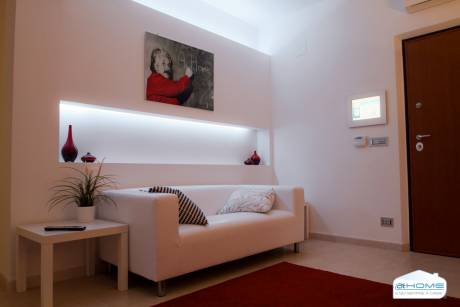
Expensive Mistakes
And while we have already analyzed the advantages of domotic systems, the price you pay if the system is not configured properly, is steep. The complexity of integrating so many different systems creates many potential problems: The system does not work properly. A badly designed or integrated system will not function properly and in many cases even the homeowners’ safety may be compromised. There is no true integration. A well-integrated system requires a minimum of control devices and units. The presence of many control units mounted on the wall is a clear sign of sub-par integration. The control must be intuitive and straightforward. Deadlines not met and cost blow-outs. Bearing in mind that so many contractors need to be coordinated, even the slightest mistake in project management can lead to costly delays. Compromised aesthetics. A smart home cannot look like an electronic showroom – the components need to be seamlessly integrated into the space aesthetics. To work with a domotics designer is not much different from working with an interior designer, an architect or any other similar professional. It is a person able to identify the client’s desires and needs, analyze the building’s plans, design a detailed solution for a domotic system and recommend the best equipment. In order to achieve the optimal results the domotic system should be designed and programmed by an expert in home automation. The process does not end with programming the control software and integrating properly all the devices, but it also has to ensure that all the client’s aesthetic and environmental criteria are met.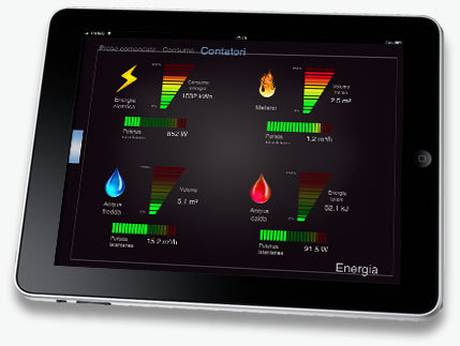
The procedure
The following part will explain the most commonly accepted procedure of designing and installing a domotic system into home and business spaces. 1. Defining the Scope of Works Defining the scope lies in foundations of any successful home automation project. Seeing that domotics is a relatively new and unexplored area, the investors and homeowners are often unable to see the advantages of the newest technology. It is necessary to lay down the system performance in different fields. A domotic system designer should present the client with all the possibilities, starting from the requirements, but not stopping there. After presenting all the possibilities to the investors, a detailed specification needs to be prepared, including the available budget, space aesthetics, functionality, energy efficiency and future technological needs. It is of the utmost importance to separate from the beginning the costs of installation and of the system itself from the costs of electronic components (local network, audio in all the rooms, home cinema and similar). 2. Design and Documentation The design and documentation requires a close cooperation between client, architect, contractor, interior designer and other people involved in order to produce documents that meet the needs of all parties involved. This is obviously a critical phase in which projects often become stuck. A domotic system designer goes from room to room and thoroughly discusses the possibilities with the interior designer, the architect and the client. Only then the functionality of each room becomes fully defined and adequate electronic equipment can be suggested, to meet the designed criteria. All systems of the building need to be involved in such detailed planning-plumbing, heating and air-conditioning systems, interior design and others, in order to lay out properly the electronic infrastructure and control devices.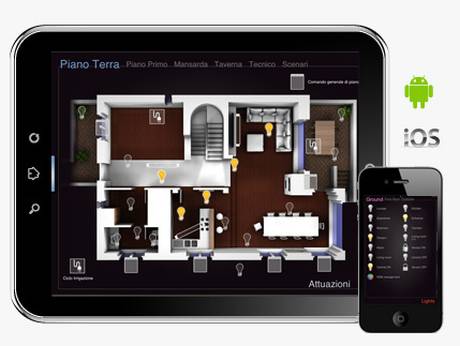 This should finally result in a set of documents that includes:
Specification of electrical installations;
Electrical layouts including power points, telephones, heating, pumps, fans, air conditioning and others;
Electronic systems layouts: audio-visual, home theatre, security, access control, CCTV, etc;
Communications layouts including internet and telephone;
Lighting layouts including zoning, switching and switch plate design;
Cable routing locations, space detectors.
The existence of such unique documentation is often essential, in order to avoid many problems that may arise if the designers work with different specifications.
3. Selecting an Electrical Contractor and Cable Layouts
The selection of an electrical contractor will depend mainly on the specification designed in the previous stage, all the more reason to make the specification as precise as possible. Previous experience is necessary and the ability to perform the specified work.
If the documentation is well-prepared, the electrical contractor will proceed to install the infrastructure: electrical, lighting, audio and video, communications and data cabling.
4. Project Management
When building a smart space, a vital factor is an open communication between different parties involved, since it is a complex process in which every step needs to be monitored.
5. The Choice of Components and Products
The final choice of certain components is usually made by the owner of the space during the construction – the choice of an audio and video system, the security system and others. At this stage we can define the final costs of these subsystems, although the components themselves are often bought at the very end. This enables the client to buy the newest systems, preferably at a lower cost, but also to get a much clearer idea of the specifications of the components used in his space (the screen size, number of control units, position of the speakers and similar).
When the final choice is made, the components are bought and installed and at this stage the space is ready for handover.
6. Handover and Tuition
When all the components are installed and programmed, the space is ready. The home automation designer explains how to operate the finished system. Since the essence of a well-designed place is simplicity, this should not be too demanding. A properly designed system is intuitive and the user should need a brief period to adjustment. You should also allow some time for fine-tuning, in which the designer may return during the following weeks to refine the system to meet the client’s needs.
This should finally result in a set of documents that includes:
Specification of electrical installations;
Electrical layouts including power points, telephones, heating, pumps, fans, air conditioning and others;
Electronic systems layouts: audio-visual, home theatre, security, access control, CCTV, etc;
Communications layouts including internet and telephone;
Lighting layouts including zoning, switching and switch plate design;
Cable routing locations, space detectors.
The existence of such unique documentation is often essential, in order to avoid many problems that may arise if the designers work with different specifications.
3. Selecting an Electrical Contractor and Cable Layouts
The selection of an electrical contractor will depend mainly on the specification designed in the previous stage, all the more reason to make the specification as precise as possible. Previous experience is necessary and the ability to perform the specified work.
If the documentation is well-prepared, the electrical contractor will proceed to install the infrastructure: electrical, lighting, audio and video, communications and data cabling.
4. Project Management
When building a smart space, a vital factor is an open communication between different parties involved, since it is a complex process in which every step needs to be monitored.
5. The Choice of Components and Products
The final choice of certain components is usually made by the owner of the space during the construction – the choice of an audio and video system, the security system and others. At this stage we can define the final costs of these subsystems, although the components themselves are often bought at the very end. This enables the client to buy the newest systems, preferably at a lower cost, but also to get a much clearer idea of the specifications of the components used in his space (the screen size, number of control units, position of the speakers and similar).
When the final choice is made, the components are bought and installed and at this stage the space is ready for handover.
6. Handover and Tuition
When all the components are installed and programmed, the space is ready. The home automation designer explains how to operate the finished system. Since the essence of a well-designed place is simplicity, this should not be too demanding. A properly designed system is intuitive and the user should need a brief period to adjustment. You should also allow some time for fine-tuning, in which the designer may return during the following weeks to refine the system to meet the client’s needs.
Domotics From the Point of View of an Architect
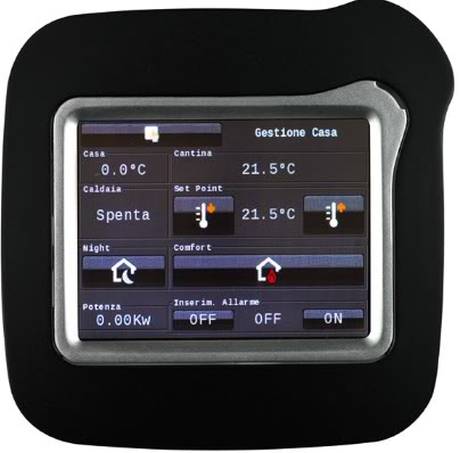
How the times have changed recently! It used to be enough to draw a chandelier at the centre of the room and a couple of lamps at the bedside tables. The electrical installations, even in a simple flat, have undergone a radical change- the space users’ appetites have grown, but at the same time, so have the possibilities of the systems themselves, says the Italian architect Giovanni Del Zanna, known for his work in domotic solutions for the elderly, in his article on domotics. An architect today should at least be acquainted with the multidisciplinary approach which is a smart space. With domotics, the information technologies have left the computers and are spreading throughout the living and business spaces. Del Zanna rightfully notes that domotics is not the possibility to automatically perform certain functions in space, but it is the ability to control the entire space, with all the amenities that this approach offers. Just like with time, we have got used to living with computers, controlled by an operative system, and attaching different peripherals to it (mouse, printer, scanner, projector), we will also get used to living in a space where electric installations become the system which connects different components and devices (actuators, electro engines, cameras, lights, heating, ventilation). Breaking the direct connection between a switch and a device (light, air conditioner or other) and replacing it with a software connection opens a new horizon of ever evolving possibilities. The possibility of programming which involves sensors, time and space defined scenarios creates a different type of problem: too many possibilities. Leaving aside the costs, it is clear that the possibilities of domotics are virtually limitless and greatly surpass the “demand” for services by space users. That is why, according to Del Zenna, the key question an architect has to make is – What use do I have from domotics? From the point of view of a space users and their needs, bearing in mind how easy it is to control the systems, the security, quality/price ratio and other important aspects, it is clear that there are relatively simple and cheap quality solutions out there, but there are also the others- which charge their performance by complexity of user interface. The role of an architect in this case is double: they should be able to inform the client on the possibilities that the system offers on the one hand, and on the other to give the system designer sufficient information about the client needs. Therefore the role of an architect is central and crucial: they are the intermediary between the world of users and the world of technology.
The biggest real obstacles to introducing a domotic system are gradually disappearing- the price of a system is constantly falling, while the communication infrastructure is getting faster and stronger, and the KNX protocol is promising, at the European level at least, that soon even the standards will not be an obstacle. What remains are subjective obstacles, and they are mainly limited to informing a space user, but also the architects themselves.
This is the third one in the series o texts on this topic, published by The Centre for Architecture Belgrade in cooperation with Cubo Control company form Belgrade. A comprehensive overview of domotics is prepared by Radiša Jovanović, PhD. and Marko Aleksendrić, PhD. They are experienced mechanical engineers, whose field of expertise covers programming and design work, through intertwining of various technologijes.
Cubo Control is an engineering and programming studio that loves technology, automatics, Italian design, but also programming of computers and other devices: from window shades to mobile phones, from basement temperature to ship engines. It is founded with the idea to provide a unified offer of high-quality solutions at affordable prices in the field of contemporary automatics, especially domotics and industrial automatization, through careful selection of high-class equipment and affirmation of state-of-the-art concepts of comfort and energy efficiency.
From the point of view of a space users and their needs, bearing in mind how easy it is to control the systems, the security, quality/price ratio and other important aspects, it is clear that there are relatively simple and cheap quality solutions out there, but there are also the others- which charge their performance by complexity of user interface. The role of an architect in this case is double: they should be able to inform the client on the possibilities that the system offers on the one hand, and on the other to give the system designer sufficient information about the client needs. Therefore the role of an architect is central and crucial: they are the intermediary between the world of users and the world of technology.
The biggest real obstacles to introducing a domotic system are gradually disappearing- the price of a system is constantly falling, while the communication infrastructure is getting faster and stronger, and the KNX protocol is promising, at the European level at least, that soon even the standards will not be an obstacle. What remains are subjective obstacles, and they are mainly limited to informing a space user, but also the architects themselves.
This is the third one in the series o texts on this topic, published by The Centre for Architecture Belgrade in cooperation with Cubo Control company form Belgrade. A comprehensive overview of domotics is prepared by Radiša Jovanović, PhD. and Marko Aleksendrić, PhD. They are experienced mechanical engineers, whose field of expertise covers programming and design work, through intertwining of various technologijes.
Cubo Control is an engineering and programming studio that loves technology, automatics, Italian design, but also programming of computers and other devices: from window shades to mobile phones, from basement temperature to ship engines. It is founded with the idea to provide a unified offer of high-quality solutions at affordable prices in the field of contemporary automatics, especially domotics and industrial automatization, through careful selection of high-class equipment and affirmation of state-of-the-art concepts of comfort and energy efficiency.
Domotics and Traditional Systems
 The essential difference between a traditional electrical installation and a domotic system lies, above all, in the degree of integration. It is possible to achieve certain functionality even with the traditional systems, but solely using separate components, without any true integration. The coordination of such subsystems usually implies unacceptable costs, but also a low level of efficiency, as well as safety and comfort.
 Figure 2.1: traditional installation system
On the other hand, domotic systems are designed to satisfy different functionalities, and most importantly, to be able to interact between different components. An example of that is a simple presence detector which works on the principle of infrared radiation (PIR sensor) which, in a traditional system, has a limited function when the alarm is on, while it can also be used in an intelligent system as a motion detector when the alarm is off, and can perform such functions as opening doors, turning on the lights and other. Certain infrared sensors can measure the light in the room and can also be programmed to turn the lights on if it is dark.
In a classic electrical installation a physical circuit connects a switch or a button directly to the powerline, for example, the light. This means that each variation in the power consumption or the subsequent addition of functionality requires some changes in the system of power cables. In an integrated system, on the other hand, a logical circuit converts an event, like pressing a button, sends a signal to a single or a group of actuators, that perform the action, such as turning on the light.
Basically, every interaction between the user of the space (via a domotic system) - whether it is direct, like pressing a button on a wall or on a panel, or indirect, such as entering a room or a change in the temperature due to an open window, could activate one or more actions (scenarios). In this way the connection between the events and the subsequent action is no longer limited to the physical cable between the devices, but solely to the information that the devices exchange.
Figure 2.1: traditional installation system
On the other hand, domotic systems are designed to satisfy different functionalities, and most importantly, to be able to interact between different components. An example of that is a simple presence detector which works on the principle of infrared radiation (PIR sensor) which, in a traditional system, has a limited function when the alarm is on, while it can also be used in an intelligent system as a motion detector when the alarm is off, and can perform such functions as opening doors, turning on the lights and other. Certain infrared sensors can measure the light in the room and can also be programmed to turn the lights on if it is dark.
In a classic electrical installation a physical circuit connects a switch or a button directly to the powerline, for example, the light. This means that each variation in the power consumption or the subsequent addition of functionality requires some changes in the system of power cables. In an integrated system, on the other hand, a logical circuit converts an event, like pressing a button, sends a signal to a single or a group of actuators, that perform the action, such as turning on the light.
Basically, every interaction between the user of the space (via a domotic system) - whether it is direct, like pressing a button on a wall or on a panel, or indirect, such as entering a room or a change in the temperature due to an open window, could activate one or more actions (scenarios). In this way the connection between the events and the subsequent action is no longer limited to the physical cable between the devices, but solely to the information that the devices exchange.
 Figure 2.2 Domotics system- separation between the powerline and the information channel
The separation of information from the action could seem unnecessary - in case of controlling only one light we need two devices instead of one, but if you look at a complex system with more appliances, the situation changes drastically. Also, to add functionality (to a device) there is no need for a change in the existing cables, but generally it is sufficient just to change the system’s programme. Due to this fact, it is advisable to design a system bearing in mind the possibility of such upgrades.
Figure 2.2 Domotics system- separation between the powerline and the information channel
The separation of information from the action could seem unnecessary - in case of controlling only one light we need two devices instead of one, but if you look at a complex system with more appliances, the situation changes drastically. Also, to add functionality (to a device) there is no need for a change in the existing cables, but generally it is sufficient just to change the system’s programme. Due to this fact, it is advisable to design a system bearing in mind the possibility of such upgrades.
 Figure 2.3- Difference between a traditional switch and an actuator
Comparative analysis of domotic and traditional systems
ADVANTAGES
Traditional system
lower price of devices;
technology known to all electricians- no explanations needed.
Domotics
increased flexibility: the system is defined by the configuration, not by the cabling;
one device can have several functions;
simplified wiring system: all connections, except between the actuator and the power are at low voltage, which decreases the possibility of a fire and simplifies the structure of the fire alarm system;
low costs of changes to the system;
the possibility of remote control.
DISADVANTAGES
Traditional system
poor flexibility;
need for many devices, which adds to costs;
higher cost of materials, labour and cabling;
increased need for fire alarm systems;
the risk of users getting into contact with power lines;
costs vary unpredictably during construction;
none or very difficult possibility of remote control.
Domotics
costs of devices slightly higher;
the technology still relatively unknown to many contractors, the need to illustrate the advantages to the clients.
This is the second in the series o texts on this topic, published by The Centre for Architecture Belgrade in cooperation with Cubo Control company form Belgrade. A comprehensive overview of domotics is prepared by Radiša Jovanović, PhD. and Marko Aleksendrić, PhD. They are experienced mechanical engineers, whose field of expertise covers programming and design work, through intertwining of various technologijes.
Cubo Control is an engineering and programming studio that loves technology, automatics, Italian design, but also programming of computers and other devices: from window shades to mobile phones, from basement temperature to ship engines. It is founded with the idea to provide a unified offer of high-quality solutions at affordable prices in the field of contemporary automatics, especially domotics and industrial automatization, through careful selection of high-class equipment and affirmation of state-of-the-art concepts of comfort and energy efficiency.
Figure 2.3- Difference between a traditional switch and an actuator
Comparative analysis of domotic and traditional systems
ADVANTAGES
Traditional system
lower price of devices;
technology known to all electricians- no explanations needed.
Domotics
increased flexibility: the system is defined by the configuration, not by the cabling;
one device can have several functions;
simplified wiring system: all connections, except between the actuator and the power are at low voltage, which decreases the possibility of a fire and simplifies the structure of the fire alarm system;
low costs of changes to the system;
the possibility of remote control.
DISADVANTAGES
Traditional system
poor flexibility;
need for many devices, which adds to costs;
higher cost of materials, labour and cabling;
increased need for fire alarm systems;
the risk of users getting into contact with power lines;
costs vary unpredictably during construction;
none or very difficult possibility of remote control.
Domotics
costs of devices slightly higher;
the technology still relatively unknown to many contractors, the need to illustrate the advantages to the clients.
This is the second in the series o texts on this topic, published by The Centre for Architecture Belgrade in cooperation with Cubo Control company form Belgrade. A comprehensive overview of domotics is prepared by Radiša Jovanović, PhD. and Marko Aleksendrić, PhD. They are experienced mechanical engineers, whose field of expertise covers programming and design work, through intertwining of various technologijes.
Cubo Control is an engineering and programming studio that loves technology, automatics, Italian design, but also programming of computers and other devices: from window shades to mobile phones, from basement temperature to ship engines. It is founded with the idea to provide a unified offer of high-quality solutions at affordable prices in the field of contemporary automatics, especially domotics and industrial automatization, through careful selection of high-class equipment and affirmation of state-of-the-art concepts of comfort and energy efficiency.
Smart Home Concept
What is domotics?
 It is very hard to define an area which is developing and changing so fast as domotics. Like for some other similarly dynamic fields (IT and others), the available information is often incomplete, not up-to-date or completely wrong. The additional problem is the absence of a uniform standard, together with the need to present it to the client, who is, by definition, focused entirely on costs, neglecting almost completely the technical aspects, such as communications protocol and others.
This series of articles is the result of an effort to create a panoramic overview of the field of domotics which would give the reader (architect, engineer or client) the notion of the basic concepts of technology. Getting to know the principles and technical possibilities of this technology, should help clients through the plethora of available products, but also with the evaluation of the different suppliers.
We shall try to present the overview and short history of domotics, with specifics and differences from the traditional home systems, we shall briefly describe the communications network, the architecture of the connection routes and basics of the communication protocol. In the final parts we shall focus on the European standard KNX-the architecture, the devices and system configuration. Domotics- the smart home concept
The needs of the modern homeowners are constantly changing and are undergoing a process of evolution, following the rapid technological advances, especially in the past ten years. Before we look back at the technology itself, we should tale a look at the way homes have been changing- during medieval times, home were almost completely empty, with rare pieces of furniture, while today, it is very hard to find adequate space for any new object, even in big apartments, especially of they are some type of electrical equipment- there are power and communication chords, modems, routers, decoders, sound systems and others.
Parallel to the introduction of the modern lifestyle is the transformation of the traditional electrical appliances into complex integrated systems, primarily thanks to the introduction of the electronic components.
Such integration brings about radical changes to the concept of a device or system- the information canal is separated form the actuator, therefore the data obtained form one sensor are no longer pertinent to the originating device, but are shared within the whole network (of the apartment or the building).
This transformation of the logic of the system enabled the possibility to eliminate the isolation of individual devices and subsystems installed in the building and opened the possibility to have new functionality, which would be unthinkable if we should rely solely on the traditional technology.
It is very hard to define an area which is developing and changing so fast as domotics. Like for some other similarly dynamic fields (IT and others), the available information is often incomplete, not up-to-date or completely wrong. The additional problem is the absence of a uniform standard, together with the need to present it to the client, who is, by definition, focused entirely on costs, neglecting almost completely the technical aspects, such as communications protocol and others.
This series of articles is the result of an effort to create a panoramic overview of the field of domotics which would give the reader (architect, engineer or client) the notion of the basic concepts of technology. Getting to know the principles and technical possibilities of this technology, should help clients through the plethora of available products, but also with the evaluation of the different suppliers.
We shall try to present the overview and short history of domotics, with specifics and differences from the traditional home systems, we shall briefly describe the communications network, the architecture of the connection routes and basics of the communication protocol. In the final parts we shall focus on the European standard KNX-the architecture, the devices and system configuration. Domotics- the smart home concept
The needs of the modern homeowners are constantly changing and are undergoing a process of evolution, following the rapid technological advances, especially in the past ten years. Before we look back at the technology itself, we should tale a look at the way homes have been changing- during medieval times, home were almost completely empty, with rare pieces of furniture, while today, it is very hard to find adequate space for any new object, even in big apartments, especially of they are some type of electrical equipment- there are power and communication chords, modems, routers, decoders, sound systems and others.
Parallel to the introduction of the modern lifestyle is the transformation of the traditional electrical appliances into complex integrated systems, primarily thanks to the introduction of the electronic components.
Such integration brings about radical changes to the concept of a device or system- the information canal is separated form the actuator, therefore the data obtained form one sensor are no longer pertinent to the originating device, but are shared within the whole network (of the apartment or the building).
This transformation of the logic of the system enabled the possibility to eliminate the isolation of individual devices and subsystems installed in the building and opened the possibility to have new functionality, which would be unthinkable if we should rely solely on the traditional technology.
 The demands of the space users are constantly growing, but so are the specifications of the new buildings, primarily for environmental, energy consumption and security reasons. The regulations relative to property construction and design of different built-in systems aim to reduce pollution, rationalize the use of energy and it is clear that to meet these demands we have to introduce the intelligent space, capable of controlling the comfort (defined and quantified in a certain, prescribed way), guaranteeing safety, low energy consumption and meeting the need of the elderly or other groups.
The very term that we prefer, domotics, comes from French neologism domotique, in fact derived from Latin word domus (house, building, home) and French automatique (system control) and is literally translated as the automated home. Besides this term, the common nomenclature is smart house, smart home and home automation.
To put it simply, domotics is the area that studies the technology designed to improve the quality of life, enable the communication between the traditional subsystems already installed in the building and the new components, with the aim of achieving new, modern functionalities. What lies in the base of this multidisciplinary field is the ability to connect electrical wiring, electronic systems, heating, ventilation and air conditioning, alarm systems, fire alarm systems, multimedia, space detection, control of windows and shades and similar systems.
A building with such integrated system enables the control through adapted interface (switches, touch screens, remote controls, speech recognition, biometrics and others) via a computer unit that can be with central or divided functionality. Different components of the system are interconnected and connected to the control system through different types of connections (for example by BUS). Such system enables the execution of user commands (from simple ones, like switching on or off the lights, opening or closing of shades, up to the complex scenarios conditioned by the weather, the user identity etc.), the constant monitoring of variables such as the temperature, humidity, energy consumption and others, the automated regulation of parameters, as well as sending certain signals of necessary, and providing remote control services. The systems are usually able to inform the user via audiovisual signal (LED diode on the switches, graphic elements on the touch screens or tablet computers, sound signals), and there is also a possibility to communicate with the system through the Internet protocol, the text messages or email.
If the concept of domotics is raised to a higher level- the level of the whole building, we talk about the so-called Building Automation, or the automation of a building creating a smart building, with modern technologies being able to control the technological installments (air conditioning, heating, ventilation, water, gas and energy distribution, security systems), information networks in order to provide flexibility, comfort and high standard of living and working in such a building. Unlike domotics, building automation is much more mature and with a standardized, stable offer and demand, and we will discuss it later in detail.
It is important to emphasize that domotics is no longer a discipline reserved for researchers or scientists; today it is available for wide variety of users, although they might require some support.
The current situation in this field, according to many studies from countries of Western Europe, the USA and Australia is specific: many potential users of smart spaces are instinctively drawn to modern solutions, but very often, after some consideration, conclude that is unnecessary and give it up. This is a very important aspect, definitely confirmed by all studies and research performed in the past ten years - a poorly informed end-user, but also architect and contractor, is a major obstacle. Logically, the first and most important step in overcoming this problem is the right information about advantages and disadvantages and specifics of domotics solutions. This is also the main goal of these articles.
The engineers themselves, unfortunately, are not of great help with this problem; usually they have met or been trained to work with only one type of equipment of one of the manufacturers, which imposes limited solutions and diverts them from considering other possibilities. Since one of the main goals of domotics in the future period is to make a technological standardization, but also to standardize everything else within the four walls (offices, hotels, flats, companies, schools), it is clear that all factors on the market should enable, though their goals and interests, above all the adequate valuation of the field.
This is the first in the series o texts on this topic, published by The Centre for Architecture Belgrade in cooperation with Cubo Control company form Belgrade. A comprehensive overview of domotics is prepared by Radiša Jovanović, PhD. and Marko Aleksendrić, PhD. They are experienced mechanical engineers, whose field of expertise covers programming and design work, through intertwining of various technologijes.
Cubo Control is an engineering and programming studio that loves technology, automatics, Italian design, but also programming of computers and other devices: from window shades to mobile phones, from basement temperature to ship engines. It is founded with the idea to provide a unified offer of high-quality solutions at affordable prices in the field of contemporary automatics, especially domotics and industrial automatization, through careful selection of high-class equipment and affirmation of state-of-the-art concepts of comfort and energy efficiency.
The demands of the space users are constantly growing, but so are the specifications of the new buildings, primarily for environmental, energy consumption and security reasons. The regulations relative to property construction and design of different built-in systems aim to reduce pollution, rationalize the use of energy and it is clear that to meet these demands we have to introduce the intelligent space, capable of controlling the comfort (defined and quantified in a certain, prescribed way), guaranteeing safety, low energy consumption and meeting the need of the elderly or other groups.
The very term that we prefer, domotics, comes from French neologism domotique, in fact derived from Latin word domus (house, building, home) and French automatique (system control) and is literally translated as the automated home. Besides this term, the common nomenclature is smart house, smart home and home automation.
To put it simply, domotics is the area that studies the technology designed to improve the quality of life, enable the communication between the traditional subsystems already installed in the building and the new components, with the aim of achieving new, modern functionalities. What lies in the base of this multidisciplinary field is the ability to connect electrical wiring, electronic systems, heating, ventilation and air conditioning, alarm systems, fire alarm systems, multimedia, space detection, control of windows and shades and similar systems.
A building with such integrated system enables the control through adapted interface (switches, touch screens, remote controls, speech recognition, biometrics and others) via a computer unit that can be with central or divided functionality. Different components of the system are interconnected and connected to the control system through different types of connections (for example by BUS). Such system enables the execution of user commands (from simple ones, like switching on or off the lights, opening or closing of shades, up to the complex scenarios conditioned by the weather, the user identity etc.), the constant monitoring of variables such as the temperature, humidity, energy consumption and others, the automated regulation of parameters, as well as sending certain signals of necessary, and providing remote control services. The systems are usually able to inform the user via audiovisual signal (LED diode on the switches, graphic elements on the touch screens or tablet computers, sound signals), and there is also a possibility to communicate with the system through the Internet protocol, the text messages or email.
If the concept of domotics is raised to a higher level- the level of the whole building, we talk about the so-called Building Automation, or the automation of a building creating a smart building, with modern technologies being able to control the technological installments (air conditioning, heating, ventilation, water, gas and energy distribution, security systems), information networks in order to provide flexibility, comfort and high standard of living and working in such a building. Unlike domotics, building automation is much more mature and with a standardized, stable offer and demand, and we will discuss it later in detail.
It is important to emphasize that domotics is no longer a discipline reserved for researchers or scientists; today it is available for wide variety of users, although they might require some support.
The current situation in this field, according to many studies from countries of Western Europe, the USA and Australia is specific: many potential users of smart spaces are instinctively drawn to modern solutions, but very often, after some consideration, conclude that is unnecessary and give it up. This is a very important aspect, definitely confirmed by all studies and research performed in the past ten years - a poorly informed end-user, but also architect and contractor, is a major obstacle. Logically, the first and most important step in overcoming this problem is the right information about advantages and disadvantages and specifics of domotics solutions. This is also the main goal of these articles.
The engineers themselves, unfortunately, are not of great help with this problem; usually they have met or been trained to work with only one type of equipment of one of the manufacturers, which imposes limited solutions and diverts them from considering other possibilities. Since one of the main goals of domotics in the future period is to make a technological standardization, but also to standardize everything else within the four walls (offices, hotels, flats, companies, schools), it is clear that all factors on the market should enable, though their goals and interests, above all the adequate valuation of the field.
This is the first in the series o texts on this topic, published by The Centre for Architecture Belgrade in cooperation with Cubo Control company form Belgrade. A comprehensive overview of domotics is prepared by Radiša Jovanović, PhD. and Marko Aleksendrić, PhD. They are experienced mechanical engineers, whose field of expertise covers programming and design work, through intertwining of various technologijes.
Cubo Control is an engineering and programming studio that loves technology, automatics, Italian design, but also programming of computers and other devices: from window shades to mobile phones, from basement temperature to ship engines. It is founded with the idea to provide a unified offer of high-quality solutions at affordable prices in the field of contemporary automatics, especially domotics and industrial automatization, through careful selection of high-class equipment and affirmation of state-of-the-art concepts of comfort and energy efficiency.
Domotics
Is it time for the house to finally become a machine?
 Contemporary home is filled with various electronic devices, that pile-up in time and become more and more important in our lives, taking over more and more functions. Ergo, they become smart. This does not apply only to the devices usually considered smart - from computers to telephones, but also to those that exist in our home for a long time already - you probably don't know what your new TV can do.
We are slowly getting used to networking these smart devices, allowing them to communicate amongst themselves - as it eases our work, as well as enjoying in music or movies. But what if we wish to go a step further and network and automatize other parts of the house?
For, the house is a machine for living. Technological development enabled us to consider using advanced systems for management of lighting, heating and cooling, surveillance and security, shading... Your home won't have a teleport, moving walls and hologram projectors any time soon, but many everyday activities will surely be much easier to do.
Contemporary home is filled with various electronic devices, that pile-up in time and become more and more important in our lives, taking over more and more functions. Ergo, they become smart. This does not apply only to the devices usually considered smart - from computers to telephones, but also to those that exist in our home for a long time already - you probably don't know what your new TV can do.
We are slowly getting used to networking these smart devices, allowing them to communicate amongst themselves - as it eases our work, as well as enjoying in music or movies. But what if we wish to go a step further and network and automatize other parts of the house?
For, the house is a machine for living. Technological development enabled us to consider using advanced systems for management of lighting, heating and cooling, surveillance and security, shading... Your home won't have a teleport, moving walls and hologram projectors any time soon, but many everyday activities will surely be much easier to do.
 In cooperation with Cubo Control company from Belgrade, we have prepared a comprehensive overview of domotics - home automatization. Experts in this field Radiša Jovanović, PhD. and Marko Aleksendrić, PhD. are the authors of texts that will follow at our site, through which we are trying to make this topic more familiar to designers - architects, interior designers, HVAC, plumbing and electrical engineers, but also to investors/developers and end-users.
Risk and Innovation
 In a recent article regarding the RISK conference, Monica Ponce de Leon and Eliel Saarinen raise the issue of the overall impact of ongoing crisis to architectural practice. While admitting that the consequences are grave, they try to accept them as grounds for boosting innovative approaches to architecture. Here are some excerpts from the article:
(...) Whether we like it or not, our ways of life are in peril. Environmental changes are affecting all of us. (...) No one can be left untouched by the deterioration of the built environment. In some measure and at some level, we are all at risk.
In an age where arts and culture are under siege — the first to be eliminated in a budget cut — it seems then, that by taking risks we may have little to lose and potentially a lot to gain. It may be only by pursuing the new and the unconventional that we may have the opportunity to serve as catalysts for change. Now more than ever we need dramatic innovation and the kind of personal risk associated with it.
This kind of risk is not new to what we do. Architecture and planning have long been understood to have the potential to develop new methodologies and systems that will impact our physical world. Recognizing this, many practitioners have pursued new modes of practice and have taken professional risks, turning conventions upside down.
The stereotypes of the master architect and master planner as iconic figures have always been at odds with the belief that architecture and urban planning should be service professions. In recent years the critique of the master has taken strong hold and service has been offered as an answer for architecture’s apparent crisis of identity and planning’s relationship to society.
Service has multiple meanings, not all of them constructive. If we intend it to mean to be helpful to others, then at best, service conjures up a generosity of spirit; at worst, the term service is burdened with moralistic undertones … as if we know best. The word service at its root shares an uncomfortable association with servitude, suggesting the subjugation of the disciplines to the status quo, unable to effect positive change and condemning our practices to follow paths set by others.
Ultimately, stereotypes are not helpful and the question as to our raison d’etre continues to haunt us. Perhaps we should simply accept the nature and the power of our disciplines. We construct the world around us. Our ideas are material. We articulate the physical structure of the city, its buildings, and its public and private spaces; in short, we construct culture. The pursuit of innovation in social entrepreneurship is our calling card — with all of the risks it may entail.
Source: Monica Ponce de Leon and Eliel Saarinen. Constructing Culture, Portico, Vol. 11-12, No. 2, 2012
More on RISK Conference here.
In a recent article regarding the RISK conference, Monica Ponce de Leon and Eliel Saarinen raise the issue of the overall impact of ongoing crisis to architectural practice. While admitting that the consequences are grave, they try to accept them as grounds for boosting innovative approaches to architecture. Here are some excerpts from the article:
(...) Whether we like it or not, our ways of life are in peril. Environmental changes are affecting all of us. (...) No one can be left untouched by the deterioration of the built environment. In some measure and at some level, we are all at risk.
In an age where arts and culture are under siege — the first to be eliminated in a budget cut — it seems then, that by taking risks we may have little to lose and potentially a lot to gain. It may be only by pursuing the new and the unconventional that we may have the opportunity to serve as catalysts for change. Now more than ever we need dramatic innovation and the kind of personal risk associated with it.
This kind of risk is not new to what we do. Architecture and planning have long been understood to have the potential to develop new methodologies and systems that will impact our physical world. Recognizing this, many practitioners have pursued new modes of practice and have taken professional risks, turning conventions upside down.
The stereotypes of the master architect and master planner as iconic figures have always been at odds with the belief that architecture and urban planning should be service professions. In recent years the critique of the master has taken strong hold and service has been offered as an answer for architecture’s apparent crisis of identity and planning’s relationship to society.
Service has multiple meanings, not all of them constructive. If we intend it to mean to be helpful to others, then at best, service conjures up a generosity of spirit; at worst, the term service is burdened with moralistic undertones … as if we know best. The word service at its root shares an uncomfortable association with servitude, suggesting the subjugation of the disciplines to the status quo, unable to effect positive change and condemning our practices to follow paths set by others.
Ultimately, stereotypes are not helpful and the question as to our raison d’etre continues to haunt us. Perhaps we should simply accept the nature and the power of our disciplines. We construct the world around us. Our ideas are material. We articulate the physical structure of the city, its buildings, and its public and private spaces; in short, we construct culture. The pursuit of innovation in social entrepreneurship is our calling card — with all of the risks it may entail.
Source: Monica Ponce de Leon and Eliel Saarinen. Constructing Culture, Portico, Vol. 11-12, No. 2, 2012
More on RISK Conference here.
The Culture Line

Crossrail Art Programme: The Culture Line or transforming transport into global iconic art.
On Monday, 25th of March 2013, Europe’s biggest infrastructure project, Crossrail has appointed Futurecity to work in collaboration to develop a visionary transport network art programme. The Crossrail Art Programme will bring world-class artists together with international architecture and engineering teams to create a permanent line-wide art exhibition across eight new central and east London stations.
Crossrail, working in collaboration with Futurecity, unveils plans for a permanent line-wide exhibition across eight new London stations.
International artist Spencer Finch’s 120 metre long A Cloud Index to be built into Crossrail’s Paddington station.
London’s leading galleries assist in the global search for artwork that will inspire generations to come.
The Culture Line will colour the blank canvas of each station and create a cultural experience for passengers at Paddington, Farringdon, Liverpool Street, Custom House, Whitechapel, Canary Wharf, Tottenham Court Road and Bond Street Crossrail stations.
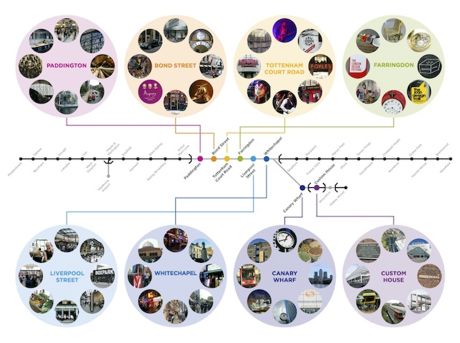
Large-scale artworks will be permanently integrated into the new stations to deliver a vibrant transport experience for generations to come. The Culture Line is part of a wider focus to regenerate areas both within and around the new stations to improve passenger experience.
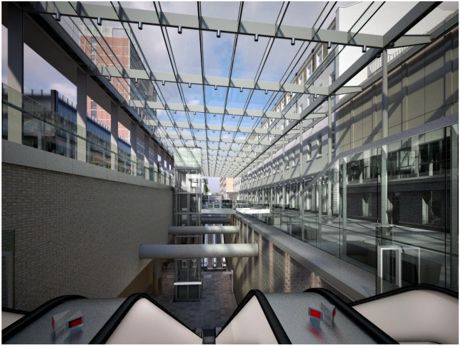
Crossrail and Futurecity are taking a unique step to work with eight of London’s leading commercial art galleries to assist in inviting world leading collaborative artists to submit proposals for the eight station installations. Crossrail’s stations will become art galleries showcasing large-scale artworks by some of the world’s most renowned artists, resulting in the largest collaborative art commissioning process in a generation.
Source: Futurecity
Frame your plans
 Department for Communities and Local Government of England published The National Planning Policy Framework in 2012.
At the time when space management policies of our cities lack vision, solid and clear structure for future development, we strongly recommend the English example. The sustainable development paradigm acts as a matrix for the Framework to address the most important issues of urban planning, such as: urban economy, sustainable transport systems, quality infrastructure, wide range of high quality homes, good design etc. The issues of (urban) environment protection have also been taken into account. Conserving and enhancing natural and historic environments and meeting the challenges of climate changes are equally important parts of the document.
The National Planning Policy Framework is downloadable here.
Department for Communities and Local Government of England published The National Planning Policy Framework in 2012.
At the time when space management policies of our cities lack vision, solid and clear structure for future development, we strongly recommend the English example. The sustainable development paradigm acts as a matrix for the Framework to address the most important issues of urban planning, such as: urban economy, sustainable transport systems, quality infrastructure, wide range of high quality homes, good design etc. The issues of (urban) environment protection have also been taken into account. Conserving and enhancing natural and historic environments and meeting the challenges of climate changes are equally important parts of the document.
The National Planning Policy Framework is downloadable here.
FACEBOOK
LINKEDIN
NEWSLETTER
CONTACT