For a Better Architecture

Jelenа Atаnаcković Jeličić, PhD, the first graduated architect from the Faculty of technical sciences in Novi Sad, and today a teacher there herself, as part of the current project by CAB: Women in Architecture, speaks about Novi Sad school of architecture, her work with students and the architecture today.
On Design
Predominantly I work as an architectural designer, although I believe that projects are mostly defined in their relation to space rather than scale. The most challenging are the projects you do for the people from you immediate surroundings, where the boundary between private and professional is blurred.
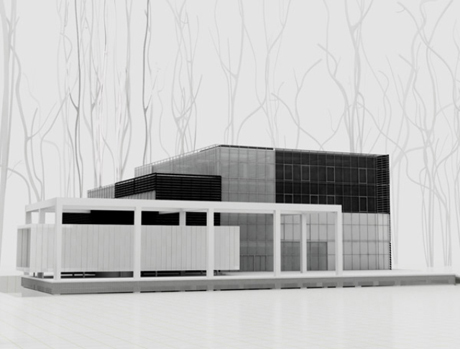
Figure 1 i 2. Central building of University of Novi Sad
On The Female Approach
I don’t believe in the distinction between female and male authors, I believe in the distinction between good and bad architecture. In all projects I have done so far, I was always a member of a team of authors, and the belonging to this team is what makes me proud.
It would be good to avoid the trap in which your surroundings look at you as a women architect and achieve that they look at you just as an architect.
On Influences
I believe that the longer you work in any field and the more you learn, the more you are aware of your own ignorance. In the past few years I’m mostly interested in the relationship between the achievements of social and human sciences and architecture. In those terms, some of the influences would be Jean Baudrillard, Jules Deleuze, Peter Sloterdijk and many others.
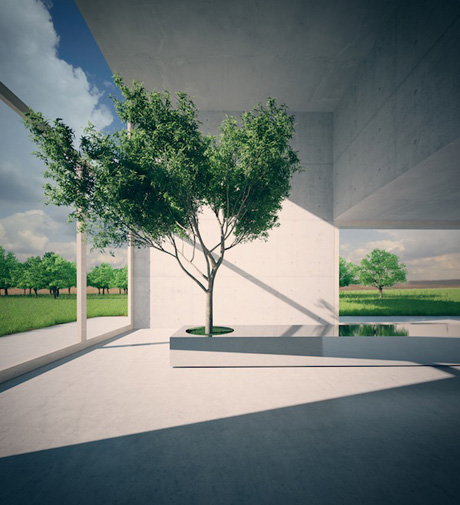
Figure 3. Agricultural school with boarding in Futog
On Teaching
Working with students is my principal choice and concern, and everything else I do is directly linked to it. This means that I consider working in academia as the highest possible responsibility, which is then reflected on all other aspects of my professional life.
On Advice
The best advice I was given was to persist in my beliefs. I believe that it’s hard to advise younger colleagues without sounding pathetic or pretentious. I try to advise them more on specific dilemmas concerning their drawings and other projects, and less about life decisions.
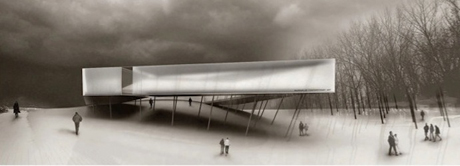
Figure 4. Competition entry for the Vojvodina Contemporary art Museum
On Architecture Today
I’m afraid that architecture (and when I say architecture, I absolutely mean also urban design and interior design) in our culture takes the place of minimal importance and I believe this thesis is something many colleagues come across in their every day professional life. Although for so many other professions it is unthinkable to have some without professional qualifications do the actual work, in the case of architecture we are often faced with the situation where owners are designing themselves, and then realizing their own ideas. This regularly results in buildings or even entire urban fragments where, because of undistinguishable and/or uncoordinated functions, meanings or aesthetics, the syntax of space is imbalanced, unclear or trivial.
On the other hand, the discussion about architectural or urban ideas and works in the public is very often reduced to the conclusion that someone “likes” or “dislikes” something, while the public has very little information what are the achievements of contemporary designs practices on a global level. Unfortunately, it seems that in our society architecture does not represent a sufficiently interesting topic for the majority of media.
What I mean to say is that the struggle for the recognition of our profession as a key element of a people’s culture is a long and painful process and the moments in which it is possible to apply some of the knowledge are rare.
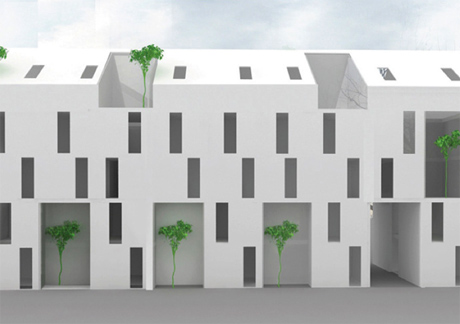
Figure 5. Housing in Novi Sad
On Novi Sad School of Architecture
In the spirit of everything previously said, even forming a new academic institution that will deal with questions of spatial organization is a difficult job. We are grateful to Professor Ranko Radović for establishing the foundations of what is today called the Department of architecture and urbanism of the Faculty of technical sciences in Novi Sad. However, we are ourselves confronted daily with the challenges of improving teaching, conditions for study, fields contained in the study programs and attempts to, through graduating students, raise the level of architectural practice in Serbia.
Jelenа Atаnаcković Jeličić, PhD, is the first graduated engineer in architecture from the Faculty of technical sciences in Novi Sad, where she also obtained her Master and PhD degrees. As a teacher at the Faculty of Technical Sciences, she leads a number of courses in undergraduate, graduate and doctoral studies. Since 2011 she’s head of the Group for architectural/urban planning, design and theory at the Department of architecture and urbanism of the Faculty of Technical Sciences. She was awarded in international competition, as well acted in juries for international architectural and urban design competitions. With a group of authors Kabinet 505 she’s successfully realized a number of projects. She is an active initiator, organizer and participant in scientific research conferences, projects and publications of international, regional, national and local character.
FACEBOOK
LINKEDIN
NEWSLETTER
CONTACT